PMU Knowledge · 14 May 2025 · 8 min read
The Fitzpatrick Scale: How Skin Type Affects Your PMU Results
Discover how the Fitzpatrick scale affects PMU results. Learn about skin types, melanin, and pigment retention in this comprehensive guide by Powdrr Academy.
By Powdrr Academy, PMU Training Experts
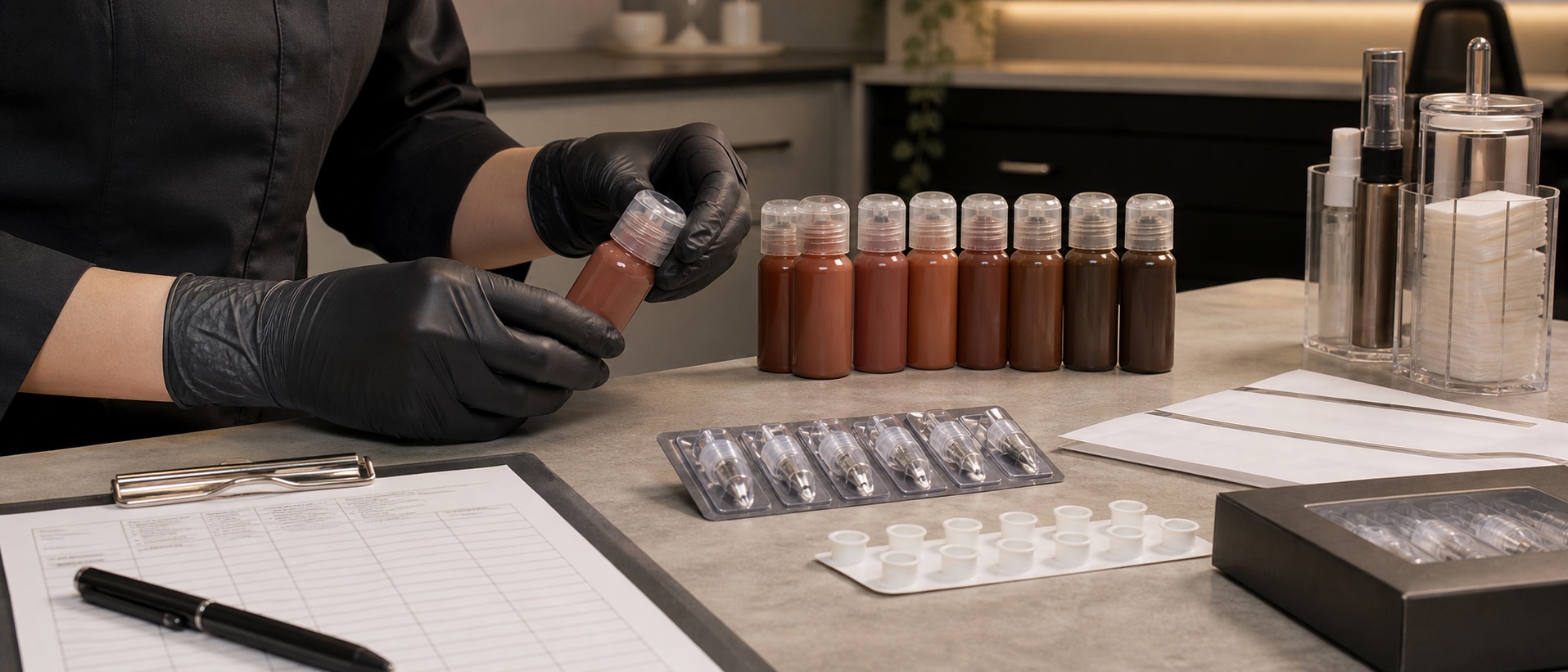
When embarking on a career in permanent makeup (PMU) or considering a treatment for yourself, understanding the canvas (the skin) is paramount. The skin is not merely a surface; it is a complex, living organ that interacts dynamically with pigments, needles, and healing processes. One of the most critical tools in a PMU artist's arsenal for understanding this canvas is the Fitzpatrick scale. This comprehensive guide explores the Fitzpatrick scale PMU connection, detailing how skin type permanent makeup interactions dictate the success, longevity, and aesthetic outcome of treatments.

Understanding the Fitzpatrick Scale
Developed in 1975 by Thomas B. Fitzpatrick, a Harvard dermatologist, the Fitzpatrick scale is a numerical classification schema for human skin colour. Initially designed to estimate the response of different types of skin to ultraviolet (UV) light, it has since become an indispensable framework in dermatology, aesthetics, and permanent makeup. The scale classifies skin into six distinct types based on the amount of melanin pigment in the skin and its reaction to sun exposure.
!The Fitzpatrick Skin Type Scale showing Types I through VI with PMU considerations
In the realm of PMU, the Fitzpatrick scale is not just about predicting sunburns; it is a fundamental predictor of how skin will heal, how pigments will heal within the dermis, and what the final healed colour will look like. Melanin PMU results are intrinsically linked, as the natural melanin in the skin acts as a filter over the implanted pigment.
The Six Fitzpatrick Skin Types
The scale ranges from Type I (very fair) to Type VI (deeply pigmented). Here is a breakdown of each type:
- Type I: Very fair skin, often with freckles, light blonde or red hair, and blue or green eyes. Always burns, never tans.
- Type II: Fair skin, light hair, and blue, green, or hazel eyes. Usually burns, tans with difficulty.
- Type III: Fair to medium skin, any eye or hair colour. Sometimes burns, gradually tans to a light brown.
- Type IV: Medium to olive skin, dark hair, and dark eyes. Rarely burns, tans with ease to a moderate brown.
- Type V: Brown, dark brown, or olive skin, dark hair, and dark eyes. Very rarely burns, tans very easily.
- Type VI: Deeply pigmented dark brown to black skin, dark hair, and dark eyes. Never burns, tans very easily.
How Skin Type Affects Permanent Makeup
Understanding skin layers for optimal pigment placement
The relationship between skin type permanent makeup is multifaceted. It influences everything from the initial colour selection to the technique used and the expected longevity of the results. Understanding this relationship is what separates a novice from a master artist.
Pigment Retention and Healing
Different skin types heal differently. Fairer skin types (I and II) often show pigment very clearly because the skin is thinner and has less melanin to obscure the colour. However, they can also be more prone to redness and sensitivity during the healing process. Conversely, darker skin types (IV, V, and VI) have more melanin, which can affect how the pigment is perceived once healed. The melanin acts as a tinted window over the pigment, meaning artists must carefully select colours that will not ash out or become too cool once healed.
Colour Selection and Undertones
Colour theory is a cornerstone of PMU, and it must be applied in conjunction with the Fitzpatrick scale. Every skin type has an undertone, cool, warm, or neutral.
"Understanding the canvas is the first step to creating a masterpiece. In PMU, the Fitzpatrick scale isn't just a guideline; it's the foundation of predictable, beautiful, and safe results. We teach our students that you cannot treat every skin type the same way and expect the same outcome." - Powdrr Academy Head Trainer
When selecting a pigment, the artist must consider the skin's undertone to ensure the healed result is harmonious. For instance, using a cool-toned pigment on a client with a cool undertone (often seen in Type I and II) can result in an undesirable grey or blue hue. Warm modifiers are frequently necessary to counteract these cool undertones.
The Role of Melanin in PMU Results
Melanin PMU results are deeply interconnected. Melanin is the pigment responsible for skin, hair, and eye colour. In PMU, the implanted pigment sits in the upper dermis, beneath the epidermis. Because the epidermis contains melanin, the final healed colour of the PMU is a combination of the implanted pigment and the client's natural melanin.
For clients with higher Fitzpatrick types (IV-VI), the abundance of melanin means that pigments will heal cooler and darker. Artists must use warmer, brighter pigments to ensure the final result is visible and true to the desired shade. Failure to account for melanin can lead to results that are too dark, ashy, or virtually invisible.
Deep Dive into Each Fitzpatrick Skin Type for PMU
To truly master skin classification PMU, one must understand the nuances of working with each specific Fitzpatrick type.
Fitzpatrick Type I
Characteristics: Extremely fair skin, often translucent, with cool undertones. Highly sensitive and prone to redness.
PMU Challenges: The skin is typically very thin, meaning pigment implants easily but can also migrate if the artist goes too deep. The cool undertones mean pigments can easily heal ashy or grey.
Best Practices: Use a very light hand and gentle techniques. Warm modifiers are almost always required to prevent the pigment from healing too cool. Soft, powdery techniques often yield better results than harsh lines, as the contrast on fair skin is stark.
Fitzpatrick Type II
Characteristics: Fair skin, slightly thicker than Type I, but still sensitive. Undertones can be cool or neutral.
PMU Challenges: Similar to Type I, there is a risk of pigments healing too cool. The skin may bleed slightly more during the procedure, which can push pigment out and affect retention.
Best Practices: Careful colour selection is crucial. Warm or neutral pigments are preferred. Artists must ensure they are working at the correct depth to avoid blurring or ashing.
Fitzpatrick Type III
Characteristics: Medium skin, often with warm or neutral undertones. This is often considered the "ideal" skin type for PMU.
PMU Challenges: Generally, Type III skin is very accommodating. However, artists must still be vigilant about undertones, as they can vary widely within this category.
Best Practices: A wide range of pigments and techniques work well on Type III skin. It retains pigment beautifully and heals predictably. This is the skin type where artists can often achieve the most true-to-colour results.
Fitzpatrick Type IV
Characteristics: Olive or light brown skin, typically with warm or olive undertones. Tans easily.
PMU Challenges: The increased melanin means pigments will heal cooler. There is also a higher risk of hyperpigmentation (darkening of the skin) if the skin is overworked or traumatised during the procedure.
Best Practices: Warmer pigments are essential to counteract the natural melanin. Artists must use precise, clean techniques to minimise trauma and reduce the risk of hyperpigmentation.
Fitzpatrick Type V
Characteristics: Brown to dark brown skin, rich in melanin.
PMU Challenges: The primary challenge is visibility. The high melanin content can obscure lighter pigments, making them invisible once healed. There is a significant risk of pigments healing very cool or ashy. The risk of keloid scarring or hyperpigmentation is also higher.
Best Practices: Artists must use rich, warm, and highly concentrated pigments. Techniques that deposit more pigment, such as ombre or powder brows, are often more successful than microblading, which can easily blur or disappear on darker skin. A thorough consultation regarding scarring history is mandatory.
Fitzpatrick Type VI
Characteristics: Deeply pigmented, dark brown to black skin.
PMU Challenges: Similar to Type V, but amplified. Visibility of the pigment is the biggest hurdle. The skin can be thicker and more challenging to implant pigment into evenly. The risk of hyperpigmentation and keloid scarring is at its highest.
Best Practices: Only the warmest, most vibrant pigments should be used, often requiring significant modification. Bold, saturated techniques are necessary for the work to be visible. Extreme care must be taken to avoid overworking the skin.
Ready to take the next step? Powdrr offers accredited PMU training with client-development support without guaranteed client numbers or business outcomes. Find out more about our training programmes.
Skin Classification PMU: Beyond the Fitzpatrick Scale
The stages of PMU healing
While the Fitzpatrick scale is an invaluable tool, it is not the only factor to consider in skin classification PMU. A comprehensive assessment must also evaluate other skin characteristics.
Skin Thickness and Texture
The thickness of the skin varies across different areas of the face and between individuals. Thinner skin (often found on older clients or those with Type I skin) requires a lighter touch and shallower implantation. Thicker skin (often found on oilier skin types or those with Type IV-VI skin) may require slightly more pressure or different needle configurations to ensure the pigment reaches the correct depth.
Oily vs. Dry Skin
Sebum (oil) production significantly impacts PMU results. Oily skin tends to heal softer and more powdery, making crisp hair strokes (like microblading) prone to blurring. Powder or ombre techniques are generally recommended for oily skin. Dry skin, on the other hand, retains crisp lines beautifully but may be more prone to flaking during the healing process.
Age and Lifestyle Factors
Mature skin is typically thinner, less elastic, and may have a slower cell turnover rate. This means it can be more fragile during the procedure but may retain pigment longer. Lifestyle factors, such as sun exposure, smoking, and skincare routines (especially the use of exfoliants like retinoids or AHAs), will also dramatically affect how the skin heals and how long the PMU lasts.
The Importance of Professional Assessment
Given the complexities of skin type permanent makeup interactions, a thorough, professional consultation is non-negotiable. An experienced PMU artist will not simply look at a client and guess their Fitzpatrick type; they will conduct a detailed assessment.
This assessment should include:
- A detailed medical history to identify any contraindications or risks of scarring.
- An evaluation of the client's natural skin tone, undertone, and overtone.
- A discussion of the client's sun exposure habits and how their skin reacts to UV light.
- An examination of the skin's texture, thickness, and oil production.
By combining the principles of the Fitzpatrick scale with a holistic understanding of skin anatomy and physiology, artists can tailor their approach to each individual client. This customisation is the key to achieving beautiful, natural-looking, and long-lasting results while minimising risks.
Conclusion
The Fitzpatrick scale is far more than a tool for predicting sunburns; it is a foundational element of successful permanent makeup. By understanding how different skin types interact with pigments, needles, and the healing process, PMU artists can elevate their craft and deliver exceptional results for every client. From the delicate, cool-toned canvas of Type I skin to the rich, melanin-dense canvas of Type VI skin, each presents unique challenges and opportunities.
Mastering the Fitzpatrick scale PMU connection requires education, experience, and a deep respect for the complexity of human skin. It is this level of expertise that distinguishes a true professional in the industry.
Ready to Master the Art of PMU?
At Powdrr, a UK PMU training provider, we believe that exceptional results start with exceptional education. Our accredited training programmes go beyond the basics, providing you with an in-depth understanding of skin anatomy, colour theory, and the Fitzpatrick scale.
Built on The Powdrr Standard, the Powdrr team are dedicated to your success. We offer client-development support without guaranteed client numbers or business outcomes and ongoing support subject to the current written course terms to ensure you have the support you need to thrive in this lucrative industry.
- Not sure where to start? Take our career quiz to find the perfect path for you.
- Ready to enrol? Explore our course pricing and options.
- Want to know more about us? Read about the Powdrr Academy and our commitment to excellence.
- Looking for more insights? Check out our blog for more expert PMU knowledge.
Elevate your skills, build your confidence, and become the industry leader you were meant to be with Powdrr.
Considering a career in PMU? Powdrr's accredited training programme covers everything from technique to business building. Take the quiz to find your perfect course.
Frequently Asked Questions
Why is understanding skin anatomy important for PMU artists?
Skin anatomy is one of the foundational skills that separates competent PMU artists from exceptional ones. Without a solid grasp of this area, you risk delivering inconsistent results, dealing with more corrections, and limiting your earning potential. Powdrr's training covers skin anatomy in depth as part of the core curriculum.
Where can I learn more about skin anatomy?
The best way to learn skin anatomy properly is through accredited, hands-on training with experienced practitioners. Online resources can supplement your knowledge, but nothing replaces guided practical experience. Powdrr's accredited courses cover skin anatomy extensively with real-world application.
How does Powdrr teach skin anatomy?
Powdrr's approach combines theory with extensive hands-on practice. You will work with real skin types, real pigments, and real scenarios under the guidance of experienced trainers. This practical approach means you graduate with genuine confidence, not just textbook knowledge.
Want to master skin anatomy and build a successful PMU career? Take the Powdrr quiz to find the right course for you.