Training & Career · 23 July 2026 · 7 min read
The PMU Client Journey: Enquiry to Healed Review
Map a safer, more user-friendly PMU client journey from first enquiry and consultation through treatment, aftercare and the healed-result review.
By Powdrr Academy, PMU Education & Business Team
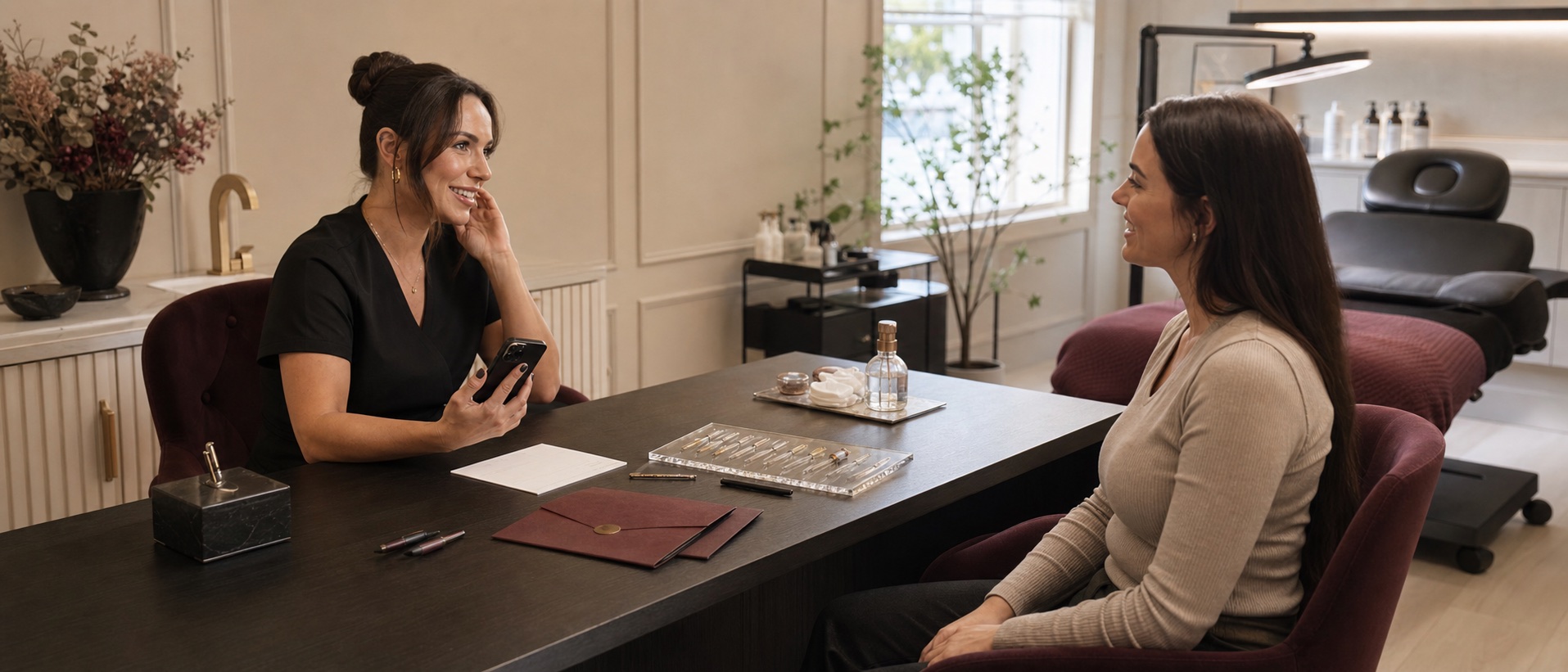
A PMU client does not experience your business as separate marketing, booking and treatment tasks. They experience one journey. Every handoff either builds confidence or creates doubt, so mapping the complete path is one of the simplest ways to improve safety and service together.
The short answer: design nine connected stages—discovery, enquiry, screening, consultation, booking, preparation, treatment, aftercare and healed review. Give each stage a clear purpose, owner, next step and record.
The nine-stage PMU client journey
| Stage | What the client needs | What the artist needs |
|---|---|---|
| 1. Discovery | Truthful services, examples, location and price context | A clear audience and accurate claims |
| 2. Enquiry | A prompt, human response and safe communication route | Enough information to choose the next step |
| 3. Screening | Privacy and an explanation of why questions matter | Potential suitability or referral flags |
| 4. Consultation | Options, limitations, healing and time to decide | Client-specific assessment and informed decision |
| 5. Booking | Clear price, terms, date and preparation | Recorded acceptance and payment |
| 6. Preparation | Relevant reminders without information overload | Confirmed attendance and changed circumstances |
| 7. Treatment | Consent, comfort, boundaries and explanation | Safe workflow and complete notes |
| 8. Aftercare | Written instructions and an accessible concern route | Appropriate follow-up and documented contact |
| 9. Healed review | Honest assessment and next-step choices | Learning, photography permission and maintenance plan |
Discovery and enquiry: answer before you sell
Your service page should help a visitor decide whether to enquire. Explain the treatment in plain language, the style of result you aim for, who may need further assessment, how healing can appear, the location, price structure and the next step. Use real work with permission and label immediate and healed results accurately.
When an enquiry arrives, acknowledge it and move sensitive information away from public comments or informal direct messages. Ask only what is needed for this stage. Never diagnose from a photograph. A structured response can still feel warm: reflect the person’s goal, explain what you need to know and set a realistic reply time.
Screening, consultation and booking
Early screening can prevent wasted journeys, but it is not a replacement for consultation. Explain how information will be used and collect it securely. Powdrr’s consultation forms guide covers the practical record, while the PMU GDPR guide covers privacy and access.
During consultation, listen before recommending. Explore the desired style, previous work, relevant history, lifestyle, maintenance expectations and understanding of healing. Explain reasonable alternatives, uncertainties and when you would decline or refer. Consent is an ongoing conversation, not a signature that transfers all risk to the client.
Only then confirm the service, price, included retouch, deposit, cancellation route, date and preparation. Use the PMU booking-terms guide to make this step clearer and fairer.
Preparation, treatment and aftercare
Send reminders in layers. The booking confirmation holds the full detail; a later reminder highlights the few actions needed now. Give clients an easy way to disclose changes without feeling that they will automatically lose their payment.
On the day, confirm identity, changes, the agreed plan and consent. Photograph only under the permissions given. Record products and batches, device and cartridge details, relevant observations, the final plan and aftercare provided. Do not let the diary pressure you to skip consultation, mapping or clean-down.
Aftercare should distinguish expected healing appearances from reasons to contact the artist and reasons to seek urgent medical help. Keep it specific to the treatment and products used. Avoid diagnosing complications; stay within your competence and insurer pathway.
Make the healed review count
The healed review is not just a “touch-up appointment”. It is where you compare the agreed goal, technique, records and healed outcome. Ask what the client experienced, inspect retention and colour within your scope, document decisions and explain maintenance. If further treatment is not appropriate, say so.
Request a review only after giving genuine value and never pressure the client to hide a concern. Marketing permission for healed photographs is optional and separate from treatment. If the client agrees, label the timing and avoid filters that distort skin or pigment.
Measure friction, not vanity
- Enquiry response time: are suitable people waiting too long?
- Enquiry-to-consultation rate: does the service page answer enough?
- Consultation-to-booking rate: track suitability and reasons without treating every “no” as failure.
- Reschedules and no-shows: which instructions or reminders are unclear?
- Concern themes: where are expectation, aftercare or handoffs failing?
- Healed-review completion: are you learning from outcomes, not just immediate photos?
Review a small sample of real journeys monthly. Read the exact messages, time gaps and records. Fix the point of friction rather than adding another automated message everywhere.
Frequently asked questions
How long should a PMU client journey be?
Long enough for safe assessment and informed choice, but no more complicated than necessary. The timing varies by treatment, client, testing requirements and business model.
Should PMU screening happen before a deposit?
Collect enough information to avoid obviously unsuitable bookings, while keeping a proper consultation later. Make the payment consequence of changed suitability clear and fair.
When should an artist follow up after PMU?
Set a treatment-specific plan that supports the client without inviting diagnosis by message. Explain the concern route and arrange a healed review at an appropriate stage.
What makes a PMU journey user-friendly?
Plain language, one obvious next step, accessible contact, minimal duplicate form-filling, secure handling of sensitive data and consistent expectations from page to person.
Build your own client journey
Walk through the process as a first-time client and remove every unclear handoff. To build these professional systems alongside practical skills, explore Powdrr’s PMU training routes or find your starting point with the Powdrr quiz.
Frequently asked questions
How long should a PMU client journey be?
Long enough for safe assessment and informed choice, but no more complicated than necessary. Timing varies by treatment and client.
Should PMU screening happen before a deposit?
Collect enough to avoid obviously unsuitable bookings, keep a proper consultation later, and explain payment consequences clearly and fairly.
When should an artist follow up after PMU?
Use a treatment-specific plan, explain the concern route and arrange the healed review at an appropriate stage.
What makes a PMU journey user-friendly?
Plain language, one obvious next step, accessible contact, minimal repetition, secure data handling and consistent expectations.