Training & Career · 23 July 2026 · 7 min read
Lone-Working Safety for PMU Artists
A practical lone-working safety guide for PMU artists covering risk assessment, bookings, check-ins, studio layout, closing routines and incidents.
By Powdrr Academy, PMU Education & Business Team
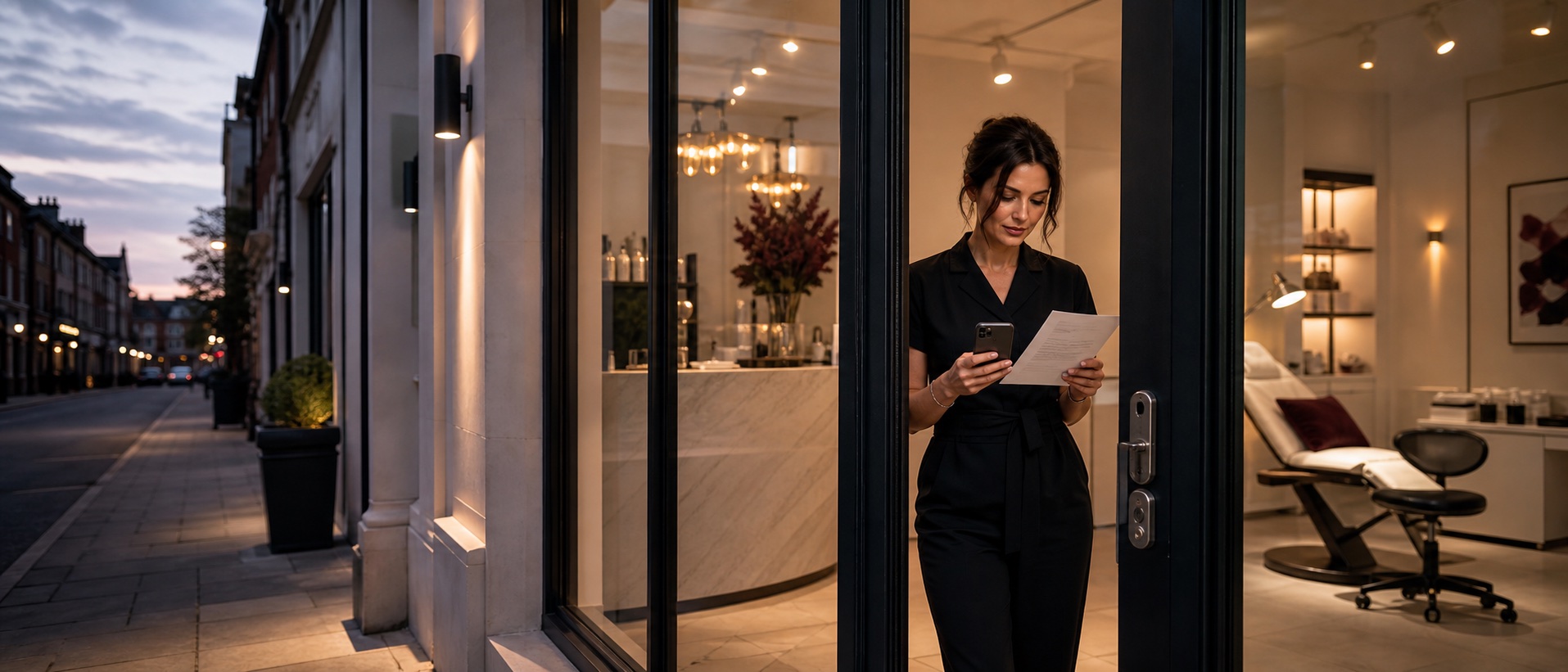
Lone working is common for PMU artists in home studios, rented rooms, mobile work and late appointments. It does not automatically make the work unsafe, but it changes how quickly help can arrive and how access, cash, client behaviour and emergencies must be managed.
The short answer: assess the real situations in which you work alone, reduce preventable risks, use a reliable check-in and escalation system, control who enters the space and make sure someone can respond when a check is missed.
HSE says employers must manage health and safety risks before people work alone. Self-employed artists should still use the same disciplined approach and check any duties, council conditions, lease rules and insurer requirements that apply.
Assess the real lone-working risks
Walk through a normal day and unusual scenarios: opening, client arrival, consultation, sharps work, a client becoming unwell, difficult behaviour, cash handling, equipment failure, fire, closing and travelling home. Consider who may be especially at risk, how a person summons help and whether help could enter.
| Situation | Questions to answer |
|---|---|
| First-time booking | What identity and contact checks are proportionate? Are boundaries clear before arrival? |
| Home studio | Can the treatment area be separated from private living space and family information? |
| Rented room | Who else is present, who locks up and how is help summoned? |
| Mobile visit | Is the address verified, travel safe and environment suitable before equipment is unpacked? |
| Late appointment | Are lighting, parking, exits and check-ins adequate after neighbouring businesses close? |
| Emergency | Can the worker stop safely, call for help and give an accurate location? |
Screen bookings without discrimination
Use consistent, proportionate booking steps: collect necessary contact details, confirm the service and location, explain behaviour and guest policies, and flag unusual requests for review. Avoid stereotyping clients or using protected characteristics as a shortcut for risk.
Keep business and personal accounts separate where practical. Do not publish private home details more widely than necessary. Store sensitive booking and treatment data securely, following the PMU GDPR guide.
Build a check-in system that can act
A message saying “all fine” is not a system unless someone notices when it never arrives. Agree:
- when the artist checks in and out;
- the appointment address and expected finish time;
- the grace period before contact;
- a discreet phrase or signal for help;
- who escalates and in what order; and
- when emergency services are contacted.
Test the process and have a backup when the nominated contact is unavailable or the phone has no signal. Technology can support the plan, but it does not replace a response.
Design the room for safe exit and privacy
Maintain a clear path to the exit and avoid placing the worker where a client blocks it. Keep keys, phone and alarm controls accessible. Use good exterior and interior lighting, secure doors that still allow emergency escape, and reception positioning with appropriate visibility.
Protect client privacy without making the artist unreachable. Manage bags, wires, sharps and equipment so a rapid stop does not create further risk. Display only the certificates and information needed for the business; avoid exposing staff schedules or personal addresses.
Set boundaries for difficult behaviour
State policies on intoxication, aggression, sexual comments, unexpected guests, filming and harassment before appointments. An artist can end an interaction when safety is at risk. Do not continue treatment simply because payment has been taken.
Train a short de-escalation response: stay calm, create distance, avoid arguing, move towards safety and call for help. HSE defines work-related violence as incidents where a person is abused, threatened or assaulted in circumstances relating to work. Review its violence-prevention guidance.
Use safe opening and closing routines
- Check entrances, lighting, communications and alarm arrangements on arrival.
- Avoid advertising that a worker is alone or that substantial cash is present.
- Schedule higher-risk or unfamiliar situations when others are nearby where possible.
- Finish notes and payments before unlocking or leaving the secure space.
- Check rooms, secure records, dispose of sharps correctly and complete the check-out.
- Vary predictable cash movements and use safer payment methods where appropriate.
Connect the procedure to the wider PMU health and safety system and the incident-response plan.
Record and learn from incidents
Record threats, abuse, near misses, missed check-ins and failures of locks, alarms or communication. Preserve relevant evidence without circulating it casually. Review whether police, insurer, landlord, employer, HSE or another route should be involved.
After immediate safety is restored, change the system: booking rule, layout, staffing time, contact procedure or training. The HSE’s lone-working guidance provides a practical official framework.
Frequently asked questions
Is it legal to work alone as a PMU artist?
Lone working is not generally prohibited, but applicable risks must be managed. Check duties and conditions for your employment status, premises, council, insurer and specific activities.
What should a lone-worker check-in include?
Include location, expected finish, check times, a missed-check response, escalation contacts and a way to request help discreetly.
Can a PMU artist refuse an unexpected guest?
A clear visitor policy can protect privacy, treatment focus and safety. Apply it consistently while making reasonable adjustments and safeguarding arrangements where relevant.
What should I do after threatening client behaviour?
Prioritise immediate safety, contact emergency services when needed, preserve evidence, record the event and use insurer, police or other appropriate reporting and support routes.
Make lone working a team conversation
Even a solo artist needs people who understand the plan and will act when a check is missed. Build professional confidence and safer systems through Powdrr’s PMU training or the Powdrr career quiz.
Frequently asked questions
Is it legal to work alone as a PMU artist?
Lone working is not generally prohibited, but applicable risks must be managed and relevant premises, council and insurer conditions checked.
What should a lone-worker check-in include?
Location, expected finish, check times, missed-check response, escalation contacts and a discreet way to request help.
Can a PMU artist refuse an unexpected guest?
A clear, consistently applied visitor policy can protect privacy, treatment focus and safety while allowing relevant adjustments.
What should I do after threatening client behaviour?
Prioritise safety, contact emergency services when needed, preserve evidence, record the event and use appropriate reporting routes.