Training & Career · 23 July 2026 · 6 min read
PMU Home Studio vs Salon Room: Which Is Right for You?
Compare a PMU home studio, rented salon room and mobile setup across cost, control, trust, privacy, licensing, hygiene and growth potential.
By Powdrr Academy, PMU Education & Business Team
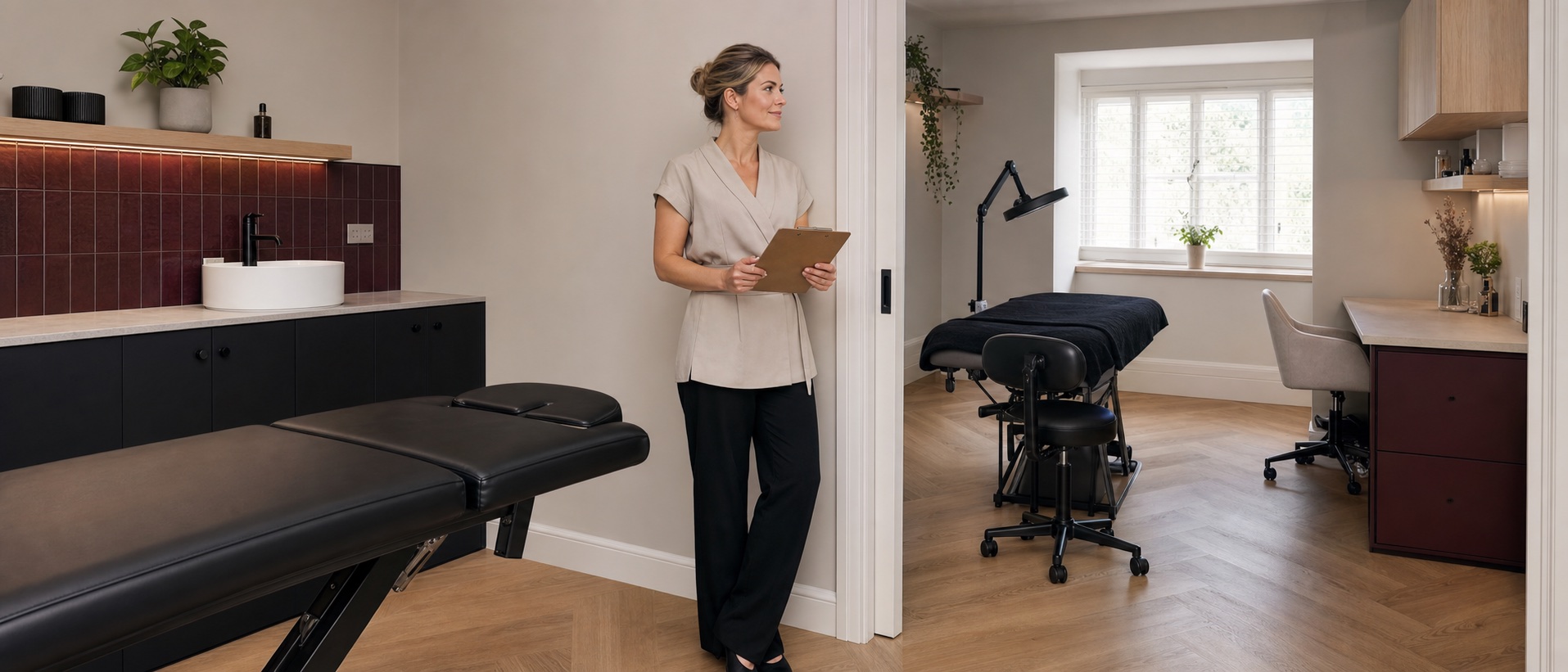
Your treatment location shapes more than rent. It affects hygiene control, client privacy, local registration, insurance, travel, pricing, diary flexibility and how the business feels. The right choice is the one that supports safe, consistent work at your current stage.
Quick comparison: a home studio can offer control and lower ongoing cost; a salon room can provide separation and existing footfall; mobile work can lower fixed premises cost but makes environmental consistency and transport harder. None is automatically compliant or professional.
Home studio, salon room and mobile compared
| Factor | Home studio | Salon room | Mobile |
|---|---|---|---|
| Environment control | High if the room is dedicated and properly designed | Depends on the salon and shared systems | Varies at every destination |
| Fixed cost | Often lower, but conversion and compliance can cost money | Rent, licence or percentage arrangement | Lower room rent; higher travel time and transport cost |
| Privacy | Good with a separate entrance or controlled household access | Potentially strong in an enclosed room | Depends on the client’s setting |
| Brand separation | Work and home can blur | Clearer professional boundary | Business travels with you |
| Local visibility | You build it yourself | May benefit from salon traffic and referrals | Wide area, but weaker location signal |
| Operational risk | Property permission and household separation | Reliance on landlord and shared practices | Variable lighting, surfaces, pets, children and waste logistics |
The non-negotiables for any PMU workspace
Whichever model you choose, the space must support your insurer’s conditions, relevant council requirements, privacy and a safe infection-control workflow. In England and Wales, semi-permanent skin colouring can require practitioner and premises registration; local rules vary. Check the GOV.UK licence finder and speak to the council responsible for the treatment address before committing to a room.
- Cleanable treatment surfaces and an uncluttered working zone.
- Appropriate hand-hygiene and cleaning facilities.
- Secure clean storage and separation of used items.
- Sharps and clinical-waste arrangements appropriate to your work and local requirements.
- Suitable adjustable lighting and safe electrical set-up.
- Private consultation and secure record handling.
- A plan for emergencies, spills, concerns and interruptions.
When a home studio works best
A home studio suits artists who have a genuinely separate, controllable room and want a predictable environment. It can also make a part-time diary more efficient because there is no commute or room handover.
Before converting a room, check:
- Written council requirements and whether planning or business-rate questions arise.
- Your mortgage provider, landlord, lease or restrictive covenants.
- Home and specialist treatment insurance.
- Access, parking, neighbours and reasonable adjustments for clients.
- How clients enter without crossing uncontrolled domestic areas.
- Whether pets, children, cooking, laundry or other household activity can affect the treatment zone.
A spare bedroom is not automatically a treatment room. Our detailed guide to setting up a PMU room at home can help you assess the conversion.
When a salon room works best
A rented room can create professional separation, easier access and referral opportunities. It is attractive when you do not have suitable space at home or want to work near complementary services.
Inspect the real operating conditions, not only the décor. Ask who holds premises registrations, who manages waste and cleaning, what happens to client records, which sinks and toilets are available, whether the room locks, what hours are guaranteed, which products are allowed, and how complaints are handled.
Read the agreement carefully. A fixed rent, daily rate and revenue share distribute risk differently. Confirm notice periods, exclusivity, access, storage, branding, utilities, reception service and responsibility for damage or cancellations.
The mobile PMU question
Travelling to clients may look flexible, but PMU depends on a controlled environment. Every location introduces questions about lighting, cleanable surfaces, hand hygiene, interruptions, privacy, pets, children, safe transport, sharps and waste. Some councils or insurers may restrict or decline mobile practice.
Do not describe yourself as mobile until your council and insurer have confirmed that model and you have a written set-up and refusal checklist. If a location is unsuitable on arrival, you need the policy and confidence to postpone.
Work out the real cost
Compare monthly cost per available treatment hour—not rent alone.
| Cost group | Include |
|---|---|
| Premises | Rent, conversion, utilities, cleaning, storage, parking and licences |
| Time | Travel, room set-up, salon opening limits, household reset and admin |
| Acquisition | Referral share, salon commission, local marketing and signage |
| Risk | Unused room days, notice periods, variable environments and dependency on a host salon |
If a salon room costs more but supplies suitable enquiries and saves hours of set-up, it may be the better commercial choice. If a dedicated home room gives stronger control and clients value privacy, it may support a premium experience. Test assumptions with actual figures.
A seven-question decision
- Will the council and insurer support this exact address and operating model?
- Can I control hygiene, privacy, storage, waste and interruptions?
- Can my target client access and trust the space?
- What is the full monthly and hourly cost?
- How much usable diary capacity does the arrangement provide?
- Who owns the client relationship, data and rebooking opportunity?
- Can I leave or expand without unreasonable cost?
Frequently asked questions
Can a PMU artist legally work from home in the UK?
It can be possible, but requirements vary by nation, local authority, property and insurer. Obtain specific confirmation before treating or advertising the address.
Is a salon room more professional than a home studio?
Not inherently. Professionalism comes from competence, safety, privacy, consistency and client care. A compliant dedicated home studio can outperform a poorly controlled salon room.
Should I rent a room by the day or pay a percentage?
A day rate gives predictable cost but you carry unused capacity. A percentage shares demand risk but becomes more expensive as revenue grows. Model both using realistic bookings.
Can I provide PMU treatments in clients’ homes?
Only if the relevant council and insurer permit it and you can meet every environmental, transport, waste and privacy requirement. Mobile PMU is not simply salon treatment with a travel bag.
Your next step
Shortlist no more than three real options, inspect each against the non-negotiables and request written confirmation from your council and insurer. Then use the 90-day PMU business launch plan to build the operation around your chosen base.
Frequently asked questions
Can a PMU artist legally work from home in the UK?
It can be possible, but requirements vary by nation, council, property and insurer. Obtain confirmation for the exact address and service.
Is a salon room more professional than a home studio?
Not inherently. Competence, safety, privacy, consistency and client care determine professionalism.
Should a PMU artist rent a room by the day or pay a percentage?
Compare both using realistic bookings: a day rate leaves you with unused-capacity risk, while a percentage becomes costlier as revenue grows.
Can I provide PMU treatments in clients’ homes?
Only if the relevant authority and insurer permit it and every environmental, transport, waste and privacy requirement can be met.