Training & Career · 23 July 2026 · 7 min read
PMU Artist Starter Checklist UK: From Training to First Client
A practical UK PMU artist checklist covering training, insurance, council registration, hygiene, kit, consent, records and your first paying client.
By Powdrr Academy, PMU Education & Business Team
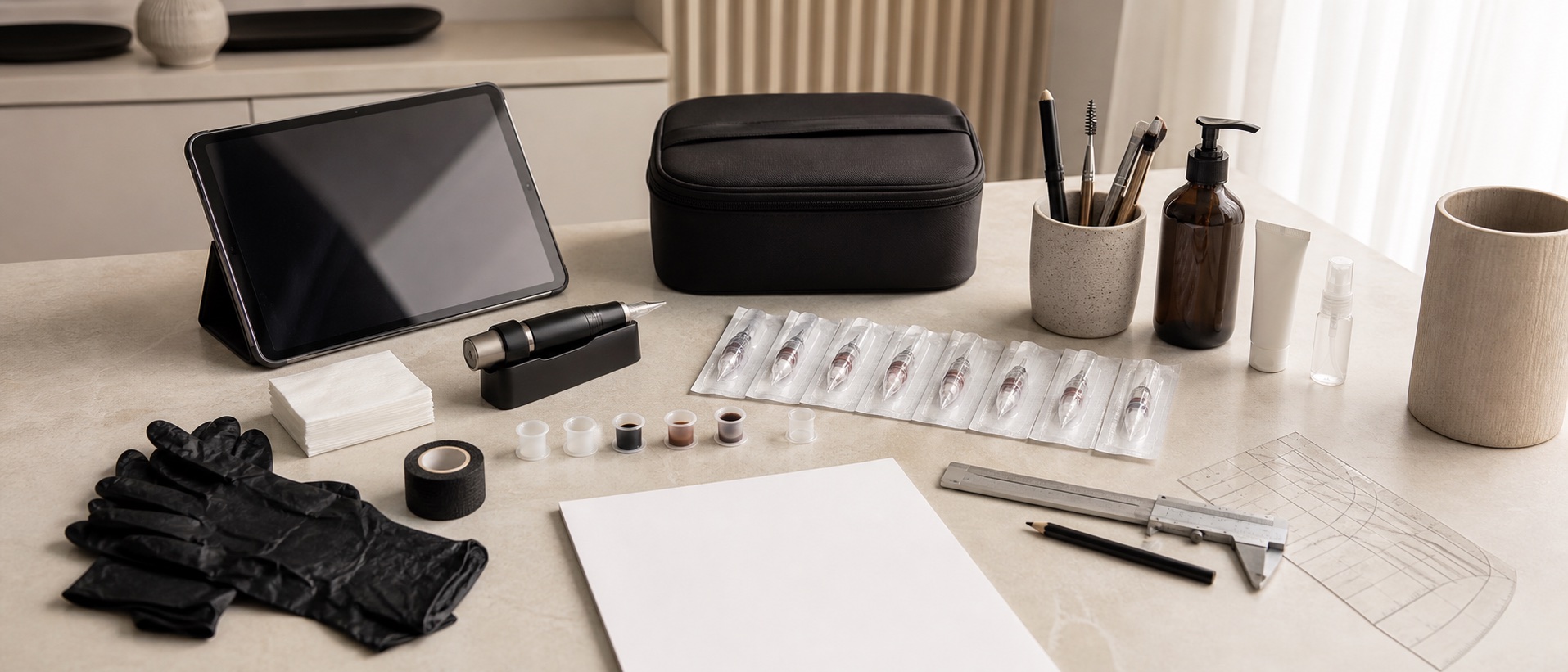
Starting a permanent makeup career is not one shopping list. It is a sequence: become competent, confirm that you can legally and safely practise where you are based, build a repeatable client journey, then begin marketing. This checklist turns that sequence into manageable decisions.
The short answer: before taking a paying client, you should be working within your training, insured for the treatments you offer, registered or licensed where required, using an appropriate treatment space, and able to evidence consultation, consent, hygiene, product traceability and aftercare.
This guide is written for new UK artists. Local requirements and insurer conditions vary, so use it as a working framework rather than a substitute for instructions from your council, insurer, trainer or an appropriately qualified adviser.
The five readiness gates
1. Competence and scope
A certificate is evidence of training, not a promise that every graduate is ready for every client. Be clear about the procedures, devices and skin presentations you have actually been trained and assessed to handle. Keep case studies, feedback and continuing professional development records. When something falls outside your competence, pause and refer rather than improvise.
Powdrr’s PMU Bible places professional judgement before speed: consultation, skin assessment, colour decisions and safe boundaries are part of the treatment, not paperwork around it. If you are still choosing a course, read how to become a PMU artist in the UK and the PMU training cost breakdown.
2. Insurance and local registration
Ask a specialist insurer to confirm, in writing, the treatments, locations, devices and circumstances covered. Do not assume a general beauty policy includes micropigmentation or that a student policy covers independent paid work.
In England and Wales, semi-permanent skin colouring can require registration of both the practitioner and premises. London has a separate special treatments licensing framework, and local rules and fees vary. Start with the GOV.UK licence finder, then obtain the exact requirements from the council where you will treat. Artists in Scotland and Northern Ireland should check the rules applying in their nation and local area. Our PMU insurance guide and licensing guide give you questions to take to providers.
3. Treatment space and infection control
Your room needs to support safe work: cleanable surfaces, hand hygiene, controlled storage, appropriate sharps and waste arrangements, privacy, suitable lighting and a clear separation between clean and used items. A beautiful room that cannot support an auditable cleaning workflow is not ready.
Write the process you will follow between every client. Include surface preparation, hand hygiene, personal protective equipment, single-use items, device barriers, sharps disposal, spill response and end-of-day cleaning. The PMU health and safety guide expands on these foundations.
4. Consultation, consent and records
A strong record explains what was decided and why. It normally includes identity and contact details, relevant medical and treatment history, contraindication screening, patch or sensitivity testing where required by your training, products and batch details, mapped shape and colour plan, signed consent, photographs, treatment notes and aftercare.
Treatment consent and permission to use an image for marketing are different decisions. Keep them separate and make marketing permission genuinely optional. Store all records securely and limit access. See the client consultation forms guide and our new GDPR guide for PMU client records.
5. Business and client experience
Before you advertise, define what the price includes, how deposits and cancellations work, when you will decline or postpone a treatment, what aftercare support looks like and how clients contact you with concerns. Policies should be clear before money changes hands.
Set up a simple bookkeeping routine from day one. If you trade as a sole trader, HMRC says you must register for Self Assessment when your self-employed income is more than £1,000 in a tax year, although other circumstances can also require registration. Read the current GOV.UK sole trader guidance and our PMU artist tax guide.
The master PMU starter checklist
| Stage | Complete before progressing | Evidence to keep |
|---|---|---|
| Before models | Training scope confirmed; supervised practice plan; insurer position checked; safe room and waste route agreed | Certificates, assessment feedback, policy documents and practice log |
| Before marketing | Local registration checked; truthful service descriptions; privacy notice; price, deposit and cancellation terms | Council correspondence, policy versions and approved marketing assets |
| Before a paying client | Consultation and consent workflow; patch-test process where applicable; batch recording; aftercare and concern pathway | Completed test record and a dry run of the client journey |
| Every treatment | Client-specific assessment; informed decision; hygienic set-up; complete notes; product traceability; aftercare | Dated client record, photographs with permission, batch and device details |
| Every month | Income and expenses reconciled; stock and expiry review; incidents and feedback reviewed; learning needs recorded | Accounts, stock log, CPD log and corrective actions |
What to buy—and what to delay
Buy for your trained scope and confirmed room, not for an imagined future menu. Your essential system includes an appropriate machine and compatible cartridges, approved pigments from traceable suppliers, mapping and colour-selection tools, infection-control consumables, sharps and waste provision, clinical-grade cleaning products used as directed, suitable lighting, record-keeping tools and compliant storage.
Delay duplicate machines, large pigment collections, elaborate décor and paid advertising until the underlying workflow is stable. A spare device may become important as volume grows, but it should not take priority over insurance, hygiene, lighting or a safe client record system.
A safe first-client plan
- Run a complete rehearsal. Practise the booking, consultation, room set-up, photography, notes, aftercare and clean-down without skipping the unglamorous parts.
- Choose within scope. Your first case should suit your assessed competence. Do not let portfolio pressure override clinical judgement.
- Allow generous time. Avoid stacking appointments. You need room for questions, careful mapping, full notes and an unhurried clean-down.
- Arrange support. Know who you can contact for technique or complication guidance and when a client needs medical assessment.
- Review the case. Record what worked, what was unclear and what the healed result teaches you before repeating the process.
Common starter mistakes
- Advertising every treatment after training in only one technique.
- Relying on an online form without having a real consultation conversation.
- Using the treatment consent form as automatic photography permission.
- Buying products from a marketplace without supplier, batch or safety documentation.
- Copying another artist’s policies without checking whether they fit your insurer and local rules.
- Pricing from competitors’ social posts rather than your costs, time, touch-up policy and positioning.
Frequently asked questions
Do I need a council licence before practising PMU?
Requirements depend on the nation and local authority. In England and Wales, practitioner and premises registration can apply to semi-permanent skin colouring; London operates a separate framework. Ask the relevant council and keep its response.
Can I work from home after PMU training?
Potentially, but first confirm council, insurer, landlord or mortgage, planning and waste requirements. The room must also support privacy and safe infection-control processes. Compare the options in our home studio versus salon room guide.
How many models should I complete?
There is no responsible universal number. Follow the assessment and case-study requirements of your course and insurer, and continue supervised practice until your trainer considers your work competent within the intended scope.
When should I start charging?
Only when you are competent for the case, properly insured, compliant with local requirements and able to deliver the complete client journey. A low price does not reduce your duty of care.
Your next step
Turn this article into a live checklist and assign an owner and deadline to every gap. If you want a structured route through technique, consultation, safety and business foundations, explore Powdrr’s PMU training or take the PMU career quiz.
Frequently asked questions
Do I need a council licence before practising PMU?
Requirements depend on the nation and local authority. Check with the council responsible for the place where you will treat and keep its response.
Can I work from home after PMU training?
Potentially, after confirming council, insurer, property and waste requirements and ensuring the room supports privacy and safe infection control.
How many PMU models should I complete?
There is no universal number. Follow your course and insurer requirements and continue supervised practice until competent within your intended scope.
When should a new PMU artist start charging?
Only when competent for the case, insured, compliant with local requirements and ready to deliver a complete safe client journey.