Training & Career · 23 July 2026 · 6 min read
PMU Artist Tax and Self-Employment: A UK Starter Guide
A plain-English UK guide to PMU artist tax, sole-trader registration, records, expenses, tax reserves and a simple monthly bookkeeping routine.
By Powdrr Academy, PMU Education & Business Team
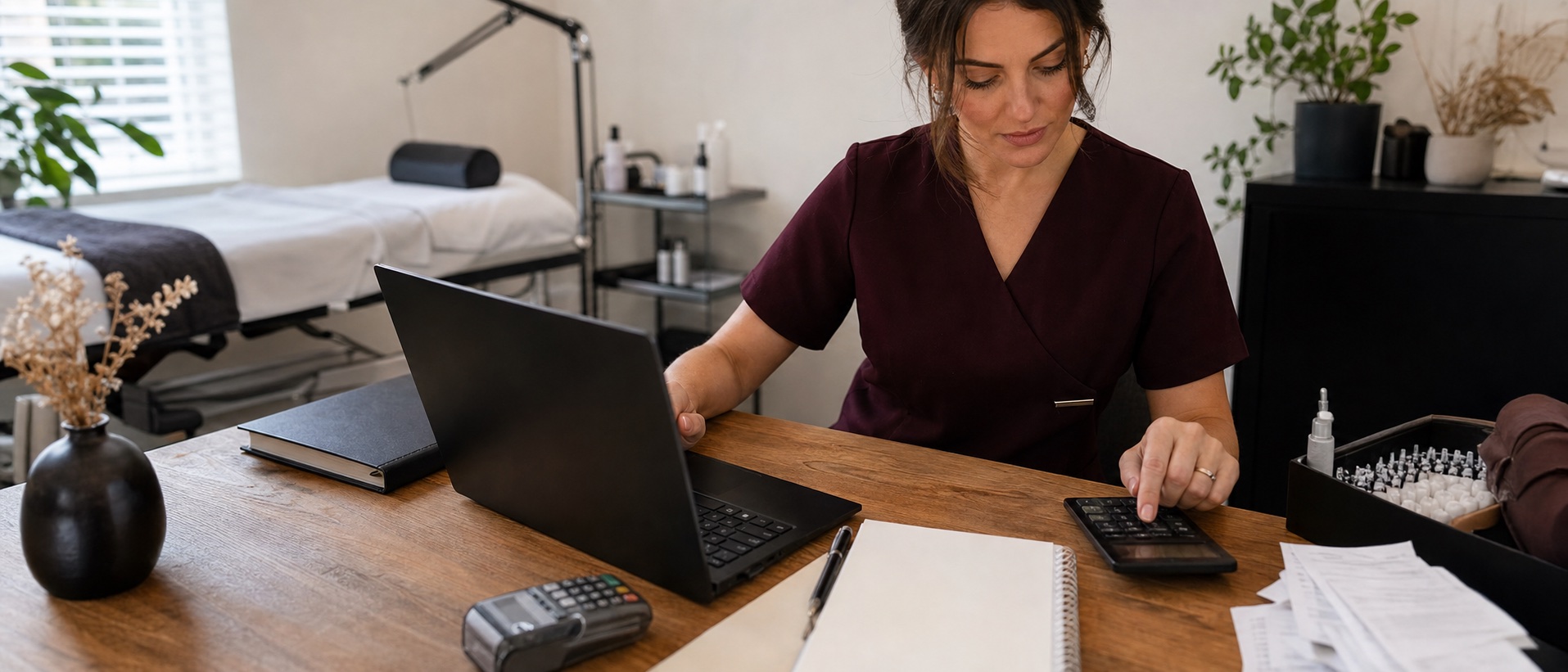
PMU artists often begin with a small model fee, a few weekend clients or rented salon days. That still creates business records. A simple system from the first payment is easier than reconstructing a year from booking messages and bank statements.
Scope: this guide explains a practical record-keeping system, not personal tax or accounting advice. Tax rules and thresholds change. Check current HMRC guidance or ask a qualified adviser about your circumstances.
Start with your trading status
Many independent artists begin as sole traders. HMRC says you must register for Self Assessment if your self-employed income is more than £1,000 in a tax year, although you may need to register in other circumstances or choose to register earlier. “Income” here is the amount received before expenses, not profit. Read the current GOV.UK sole trader guidance.
A limited company is a different legal and administrative structure; it is not automatically more tax-efficient or more professional. Choose it after considering profit, risk, payroll, extraction of money and administration with an accountant—not because another artist uses “Ltd” on Instagram.
Turnover, profit and cash are different
- Turnover: business income before allowable expenses.
- Profit: broadly, taxable business income minus allowable business expenses, subject to tax rules.
- Cash: money currently in the account, which may include amounts needed for tax, refunds, stock and future bills.
A £350 booking is not £350 of personal spending money. It may need to cover consumables, room cost, booking fees, insurance, software, future touch-up time and tax. This is why a price should be based on the full service, not only treatment-table time. See the PMU pricing guide.
What records should a self-employed PMU artist keep?
Record every business sale and expense. Keep invoices, receipts, bank records and supporting evidence for any tax position. Reconcile deposits, balances, tips, refunds, gift vouchers, model fees and cash as well as card payments.
| Record | Useful fields | Why it matters |
|---|---|---|
| Sales | Date, client reference, service, gross amount, payment method, fees, refund | Reconciles bookings to money received |
| Purchases | Date, supplier, item, business purpose, amount, tax invoice | Supports expense claims and stock control |
| Mileage or travel | Date, business journey, start/end, miles or actual-cost evidence | Separates business from private travel |
| Equipment | Purchase date, description, amount and disposal | Some items may be treated under capital allowance rules |
| Training | Course, date, purpose and existing trade connection | The tax treatment can differ for starting a new trade versus updating existing skills |
HMRC’s current record-retention guidance says self-employed people generally keep records for at least five years after the 31 January submission deadline for the relevant tax year. Longer periods can apply in some situations. Check how long to keep self-employed records.
Common PMU expense categories
HMRC allows costs that are incurred for the business, subject to specific rules and any private-use apportionment. Potential categories can include treatment consumables, room rent, specialist insurance, booking software, website costs, professional fees, certain travel, advertising, uniforms or protective clothing and qualifying equipment.
Do not assume everything connected to beauty or appearance is allowable. Everyday clothing, mixed personal expenses, client entertainment and the cost of learning a completely new trade can be treated differently. Use HMRC’s self-employed expenses guidance and obtain advice for unclear items.
Create a tax reserve without guessing your bill
Use a separate savings space and transfer an agreed percentage of receipts or estimated profit on a regular schedule. The right percentage depends on your other income, profit, student loans, National Insurance and personal circumstances. An accountant can help you forecast it.
The aim is not to predict the bill perfectly. It is to stop money intended for tax being absorbed by stock, training or personal drawings. Review the reserve quarterly as actual profit becomes clearer.
A 30-minute monthly bookkeeping close
- Match booking-system sales to bank, card and cash receipts.
- Record refunds, fees, vouchers and any unpaid balances separately.
- Upload and categorise receipts; write the business purpose while you remember it.
- Check stock and large purchases against invoices.
- Transfer money to the tax reserve.
- Review turnover, direct cost, overheads, approximate profit and forward bookings.
- Back up the records and note questions for your accountant.
Employed, self-employed—or both?
You can be employed in one role and self-employed for your PMU work. But a salon calling you “self-employed” does not settle the legal status if the working arrangement looks like employment. Control, substitution, financial risk, integration and other facts matter. HMRC publishes a hair and beauty employment-status guide and an online status tool.
If you rent a room, keep the agreement and evidence of how the arrangement operates in practice. Clarify who sets prices, takes payment, owns client data, supplies products, handles complaints and carries rework risk.
Financial mistakes to avoid
- Using social-media bookings as the only sales record.
- Mixing business and personal payments with no reconciliation.
- Counting deposits as “extra” without tracking the service or refund obligation.
- Setting prices before calculating touch-up and non-treatment time.
- Spending the tax reserve during a quiet month.
- Assuming a course, vehicle or wardrobe is deductible without checking the rules.
Frequently asked questions
When must a PMU artist register as self-employed?
HMRC says sole traders must register for Self Assessment when self-employed income is over £1,000 in a tax year, although other reasons can apply. Check the current guidance for the relevant year.
Can PMU artists claim pigments and needles as expenses?
Products used wholly for the trade are commonly business costs, but the exact tax treatment depends on the facts. Keep itemised invoices and ask an adviser if use is mixed or unclear.
Should I open a separate business bank account?
A sole trader is not always legally required to have one, but a separate account or dedicated payment route makes reconciliation and evidence much clearer. Check your bank’s terms.
How much should I save for tax?
There is no universal safe percentage. It depends on profit and your wider tax position. Build a forecast from current HMRC rates with a qualified adviser, then review it during the year.
Your next step
Create four categories today: sales, direct treatment cost, overheads and tax reserve. Reconcile the current month, then add the monthly close to your diary. For the wider commercial plan, follow the 90-day launch plan.
Frequently asked questions
When must a PMU artist register as self-employed?
HMRC says sole traders must register for Self Assessment when self-employed income is over £1,000 in a tax year, although other reasons can apply.
Can PMU artists claim pigments and needles as expenses?
Products used wholly for the trade are commonly business costs, but the exact tax treatment depends on the facts and evidence.
Should a sole-trader PMU artist open a separate business bank account?
It may not always be legally required, but separating transactions makes reconciliation and record evidence much clearer. Check the bank’s terms.
How much should a self-employed PMU artist save for tax?
There is no universal percentage because profit and wider tax circumstances differ. Build and review a forecast using current HMRC rates.